Showing posts with label technology. Show all posts

Thursday, June 30, 2011

Massive Information Stockpile Guides Humanity's Course

 
Sixty one CD-ROMS for every man, woman, and child on Earth.
 
That's the amount of global data humankind stored on devices of every kind in 2007 -- 295 exabytes, or 80 times more information per person than exists in the historic Library of Alexandria, Egypt, according to a study published in the journal Science.
 
"We tracked 60 analog and digital technologies from 1986 to 2007," said study co-author Martin Hilbert, Ph.D., an information researcher at USC Annenberg School for Communication & Journalism.
 

Verizon Goes for FCC's Jugular in Net Neutrality War

 
Verizon may have been involved in the crafting of the FCC's Net neutrality rules, but that doesn't mean the company wouldn't rather do without them, and it's taking the matter back to the courts. 
 
For its part, the FCC is "prepared to defend its Open Internet Order in any forum." The battle may end up being waged in Congress, where Verizon may find fresh support.
 

People Are People: Human Factors Engineering Works at the Intersection of Humanity and Technology

AAMC Reporter

Some teaching hospitals and health systems are taking a fresh look at human factors engineering (HFE), a discipline not often associated with medicine, but one that proponents say can improve the quality and safety of health care.

In a nutshell, human factors engineers attempt to learn about human strengths and limitations, and then apply that knowledge to products and processes to reduce errors and improve quality and productivity.

Enterprises that rely heavily on people interacting with technology, such as aviation and consumer electronics, are prominent HFE users. Health care, however, has lagged behind other industries in adopting HFE programs.

READ THE REST

Sunday, January 16, 2011

IPv6 for a Day: Sampling the New Web World

IPv6 for a Day: Sampling the New Web WorldBy Mike Martin
TechNewsWorld

It's been a long time coming, but IPv6 will soon go live -- for a day. Several Internet technology leaders are joining with the Internet Society to get some real Web-world experience using the new protocol this June. 

"By providing an opportunity for the Internet industry to collaborate to test IPv6 readiness, we expect to lay the groundwork for large-scale IPv6 adoption," said the Internet Society's Leslie Daigle.

Google Adds a Little Magic to Earth

Google Adds a Little Magic to EarthBy Mike Martin
TechNewsWorld

Google Earth is "a beautiful, user-friendly site to help us gain better awareness of our neighborhoods and our planet," said Jonathan Askin, a Brooklyn Law School professor. 

Among the new features of the latest release are "3D trees" that let users examine dozens of native species in detail when strolling through parks and forests at ground level.

Wikileaks Spill: Catalyst for New, More Open Style of Governing?

Wikileaks Spill: Catalyst for New, More Open Style of Governing?
Hero, fool -- even terrorist -- are some of the characterizations of Julian Assange, founder of Wikileaks, which revealed sensitive exchanges between the U.S. and other governments on its website. 

"Mr. Assange doesn't understand how the U.S. constitutional democracy was meant to work, and has ensured that we will not be trusted in our foreign relations efforts for a long time to come," said BU professor Michael Corgan.

Is That a Computer You're Wearing on Your Head?

 By Mike Martin
TechNewsWorld

Motorola (NYSE: MOT) announced Wednesday that it will develop a hands-free wireless computing headset with micro-display specialists at Kopin -- a move reminiscent of previous attempts to create wearable computers and communications devices. 

The device will offer voice, audio and PC capabilities on a virtual reality-style 15-inch monitor that will also support simulation software and streaming video.

"We believe this computer headset will be a game-changing solution for mobile workforces," said Motorola emerging business director Tom Bianculli in a prepared statement. TechNewsWorld's attempts to contact Motorola were not successful.

Saturday, January 15, 2011

FCC Aims to Bring 911 Into the Modern Era


FCC Aims to Bring 911 Into the Modern Era
By Mike Martin


Berners-Lee Sounds Alarm Over Appified, Siloed, Regulated Web

By Mike Martin
TechNewsWorld

Tim Berners-Lee has set off a debate over the future of the Web, arguing in an essay published in Scientific American that the walled gardens being created by social networks, businesses and governments could create isolated islands of information in a vast ocean of lost data. At stake is the "continuous worldwide conversation" that the Internet enables, he maintains.

Sunday, November 21, 2010

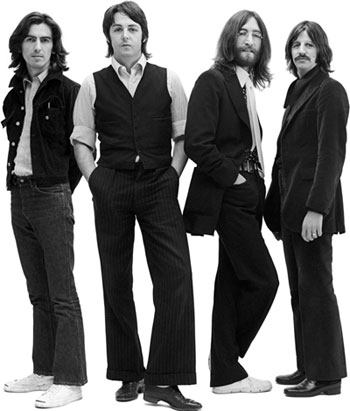
Bells Ringing in Cupertino: The Beatles Have Been Landed

By Mike Martin
MacNewsWorld
Part of the ECT News Network
11/16/10

Steve Jobs has made no secret of his wish to draw The Beatles into his Apple universe, and once again, he has managed to turn his vision into reality. The legendary band has been deeply reluctant to join the digital download music revolution, but the day has come, spurring weighty reflections and hallelujahs in the form of one-liners pulled from the group's vast library of songs.

Read the rest

Friday, September 17, 2010

The Measure of Success

By Mike Martin for Oregon Quarterly
 
Frustrated by poor student performance in introductory courses they were teaching, University of Oregon physics professors James Schombert and Stephen Hsu wondered if they were missing something in the acronym-driven numbers game—GPA, SAT, GMAT, GRE, ACT—that dominates the college admissions process.
 
Freshman students with high entrance-exam scores weren’t performing as well as expected, and “we were unable to determine if there was a deficiency in our teaching or in student cognitive abilities,” Schombert explains. “Being good scientists, we began looking for answers.” 
 

Tuesday, July 20, 2010

Like Google Earth, Below Ground


By Mike Martin for E Magazine

The power grid isn’t just above the ground. Much of the power transmission grid lies in a hard-to-navigate subterranean world. Mark Smith, CEO of Geospatial Corporation, believes the answer lies in a Google Earth-like application that maps the world below the ground’s surface.

The Great Green Grid

A Smart Grid That Lets Us Better Control Our Energy Use May Finally Be Ready to Launch 
 
By Mike Martin for E Magazine
 
Our current electric power grid hasn’t changed in the last 100 years. It’s designed to move electricity in one direction—from mostly fossil-fueled generation plants to user—and makes only limited use of automation and information technology. And it can’t collect power consumption information in real time. The smart grid would change that dynamic with a two-way flow of both electricity and information. It would also open the door for renewable energy sources like wind and solar to get connected and start to reduce the national dependence on dirty fossil fuels like coal, oil and gas.
 
Many homes already feature solar panels and even wind turbines that could actually add electricity to the grid. But the current system of transmission lines isn’t able to determine how much renewable energy will be available at a given time—after all, solar power and wind power are both subject to fluctuation—so utilities produce the same amount of electricity regardless. And, in general, they have to overcompensate. In order to match electricity supply with demand, utilities decide on a level of demand that would be excessive and then match it. 

Read the rest.

Sunday, July 18, 2010

Green Schools: The Eco-Schoolhouse That Could

By Mike Martin for E Magazine

The “eco-schoolhouse” was built after an arson fire destroyed a portable classroom at Grant Elementary in Columbia, Missouri. It’s a 21st century one-room schoolhouse nestled behind a century-old main building named for President Ulysses S. Grant.  
 
The 1,024 square-foot classroom was designed for platinum certification under the U.S. Green Building Council’s Leadership in Energy and Environmental Design (LEED) program. Rain barrels irrigate a student garden; reflective/conductive roofing reduces heating and cooling costs; solar panels generate electricity; and students use desks, chairs and tables made from recycled materials.   
 
Ultra-economical R-24 insulation buffers fireproof drywall, a subtle reminder of the tragedy—and the community it brought together. After the fire, parents donated books and educational aids; students made art and decorations; contractors, building suppliers and architect Nick Peckham—whose granddaughter Nora attended Grant—designed and built the schoolhouse, donating what fire insurance wouldn’t cover—about $250,000 in time and materials.  
 

Monday, March 1, 2010

Generation Solar: Third-Generation Solar Cells Will Work Better, Cost Less


By Mike Martin for E-Magazine 

Turning sunlight into electricity is big business, with the market for photovoltaic technologies expected to grow a whopping 39.9% over the next five years, according to Georgina Benedetti, an energy analyst for Frost & Sullivan.

“Solar is predictable,” says Robert Wendt, a chief technology officer for solar company XsunX. “It’s adaptable. It’s compatible with other renewable sources such as wind. It allows installers to provide performance guarantees; it requires little maintenance; and it has no negative impact on the environment.”   

And soon, solar may be cheap enough to compete with traditional power. Third-generation solar will “provide electricity on a massive scale, using low-cost raw materials,” predicts Stephen Squires, CEO of solar cell manufacturer Solterra Renewable Technologies, Inc. “A third-generation solar power plant will produce more megawatts per day than first- or second-generation solar plants can produce in a month,” he says.